
Organic vs Regular Croutons: Which One Should You Choose?
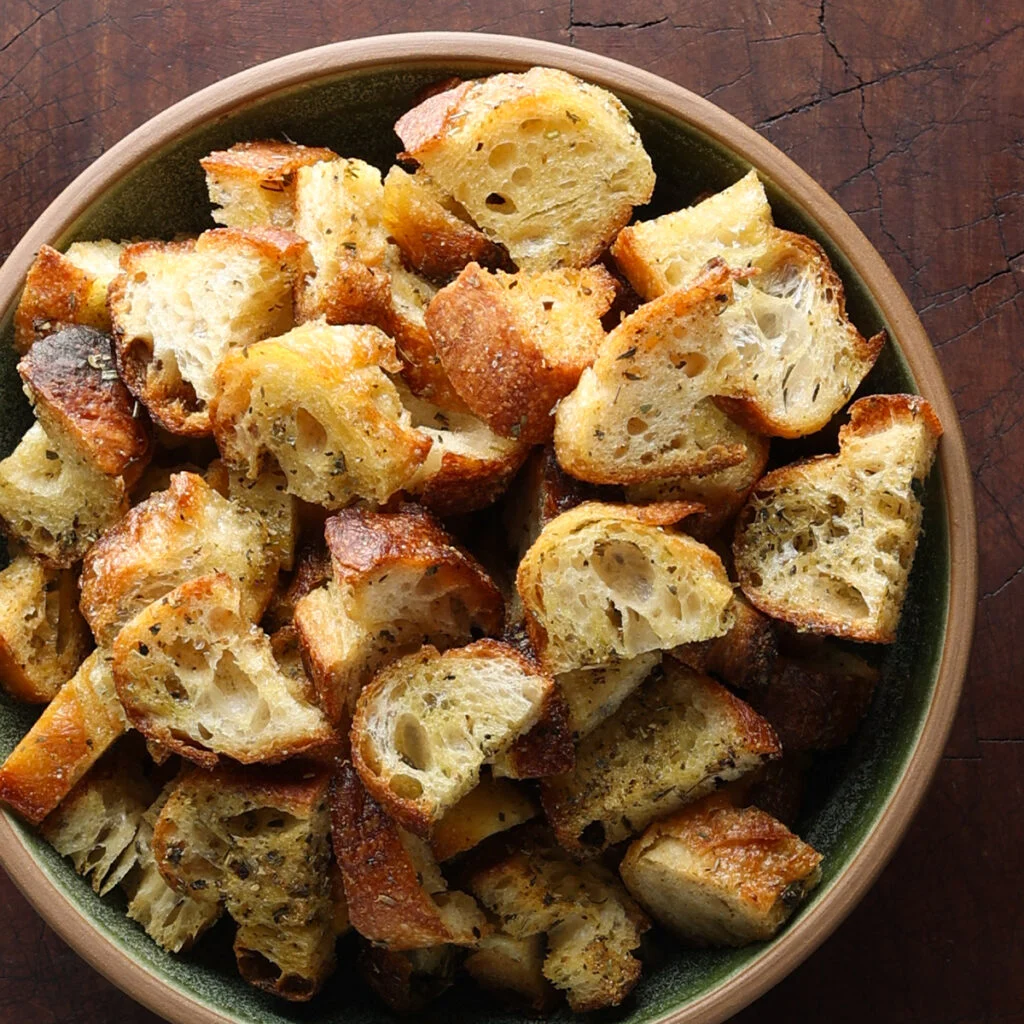
Croutons are one of those things people don’t think about much — until they have a really good one. At that point, you start to notice that not all croutons are the same. Walk into any grocery store and you’ll find standard bags sitting next to organic options at twice the price. So when it comes to organic vs regular croutons, is the difference real or just marketing?
Let’s look at what actually separates them.
What Makes a Crouton “Organic”?
Organic croutons start with bread made from organically grown grain — wheat that was farmed without synthetic pesticides or fertilizers. The other ingredients (oil, salt, herbs, cheese flavoring) may also carry organic certification.
This matters to some people for environmental or personal health reasons. But in terms of what you actually taste, the distinction between organic flour and conventional flour in a baked product is subtle at best.
What makes a bigger difference is the bread type and the oil used for toasting.
Ingredient Quality: Where the Real Gap Shows
Whether organic or not, the best croutons share one characteristic: short ingredient lists. A good crouton should be bread, oil, salt, and seasoning. That’s essentially it.
The problem with many standard croutons isn’t necessarily the flour — it’s everything else. Artificial flavors, hydrogenated oils, preservative blends, and caramel color all show up in some popular standard brands. These additives extend shelf life and create a more uniform appearance, but they don’t contribute to flavor.
Gourmet and organic versions tend to use olive oil or avocado oil instead of processed vegetable oil, real cheese instead of cheese flavoring, and actual herbs instead of “natural flavors.” That’s the meaningful difference — not whether the wheat was organically farmed.
This same principle applies across gourmet pantry staples, which is something we examine more broadly in Is Gourmet Food Healthier?
Organic vs Regular Croutons: Taste and Texture
Organic croutons often use artisan-style bread — sourdough, whole grain, or rustic loaves — which gives them a more irregular, open texture. That texture absorbs dressing better and creates more surface area for the toasted crust to develop.
Standard croutons tend toward a more uniform cube shape with a consistent crunch. They’re engineered for predictability, which isn’t inherently bad — just different.
Neither is objectively better. It depends what you’re using them for. For a hearty Caesar or a tomato soup bowl, the more rustic organic crouton works beautifully. For a composed salad where uniform texture matters, standard croutons might actually serve you better.
Can You Make Your Own Gourmet Croutons?
Yes, and this is actually the most cost-effective option of all. The FAQ on homemade gourmet croutons walks through the process step by step. The short version: cube day-old artisan bread, toss with olive oil, garlic, and dried herbs, then bake at 375°F for 10 to 15 minutes until golden.
Homemade croutons let you control every ingredient, match your bread to your salad style, and cost significantly less than premium store-bought options.
Where Croutons Work Best
Beyond salads, croutons have more uses than most people put them to:
- Soups — add just before eating for crunch contrast against broth or cream
- Pasta — crushed croutons work as an alternative to breadcrumbs over pasta with olive oil
- Egg dishes — crumbled over scrambled eggs or a frittata for a toasty finish
- Salad toppers alongside other gourmet ingredients — pair with honey roasted almonds and dried cranberries for a layered crunch effect
For the full salad-building approach, our best gourmet salad ingredients guide is worth bookmarking.
Shelf Life Considerations
Both types have similar shelf life in the bag — six to nine months unopened. Once opened, they’re best within three to four weeks in a sealed container. Moisture is their enemy. For a complete freshness guide covering all gourmet pantry items, see our shelf life guide.
The Verdict
Organic vs regular croutons comes down to ingredient quality, not the organic label itself. Read the back of the bag. Fewer ingredients with recognizable names — regardless of whether they’re organic — usually means a better crouton. If you have the time, making your own is the best option every time.